Mostrando postagens com marcador roubei mas já devolvo. Mostrar todas as postagens

terça-feira, 25 de junho de 2013

"I'm thinking about you", by Mike Taylor

From "Brave New Voices", as seen on YouTube:

Yesterday you asked me
if I think about you during the day,
in class or on the bus.
Do I ever wonder who you’re with,
or what you’re doing,
or what you’re thinking about?
Well, I’m in math class right now...
and I’m thinking about you like crazy!

Like,
hands think about holding,
and arms think about folding.
and minds think about not thinking,
but knowing.

I’m thinking about you
like feet think about socks
and socks think about shoes.

I’m thinking about you
like rock and metal think about screaming
like blues think about rhythm,
like hip-hop thinks about… hoes?
Like gardeners think about hose,

I’m thinking about you
like tops think about spinning
like rocks think about sitting
and cops think about arresting people.

I’m thinking about you
like people think about the clock
five minutes before their shift ends.

I’m thinking about you
like A thinks about being with B,
like B thinks about C and D,
like E, F and G,
like H… I and J.

I’m thinking about you
like white and black think about
making grey in a paint pallet,
like night thinks about making day in the morning
like rain clouds think about pouring,

I’m thinking about you
like math analysis thinks about being boring
(Because, seriously,
any class this boring
has had to take some serious thought.)

I’m thinking about you
like the last problem in this math quiz.

I’m thinking about you
like bugs think about grass,
like thugs think about… grass.

like students think about class,
like, ladies! think about class,
like lower mid class people think about flying first class to places
they only think about, like New Zealand or France.

I’m thinking about you
like pilots think about the horizon,
like the clouds think about the wind
and the wind thinks about trees,
like teenage boys think about the birds and the bees,
and the bees think about serving the queen, and making honey,
and honey, I’m thinking about you like crazy!

Like,
like mattresses think about springs
and winter thinks about spring,
who thinks about summer
and it doesn’t matter what season it its!
When I’m thinking about you it’s always sunny,
like rainbows and bunnies,
and I’m thinking about you
like rich people think about making money,
and broke people think about making money,
and when I’m thinking about you,
the world makes sense.

Let me go change.
I’m thinking about you when I get dressed
because, before I step on stage,
when I look at myself in the mirror
you’re the only one
that I’m trying to impress.

I’m thinking about you
like boats think about floating
and paddles think about rowing
and poets think about flowing
I’m thinking about you
like bankers think about loaning
like renters think about owning
and stoners think about…
throwing rocks!

I’m thinking about you
like keyboards think about keys,
and keys think about unlocking locks,
like goldilocks still thinks about bears
like Bears thinks about being cool.

I’m thinking about you
like refrigerators think about being cool
and microwaves think about being hot,
like kids think about breaking rules,
like targets think about getting shot.

I’m in math class right now,
not trying to get you off my mind.
Just simply off the sine, cosine
and tangent lines I’m graphing.
I’m thinking about you
like numbers think about adding,

like cripples think about standing.
I’m thinking about standing up
and walking out.

I’ll say I have to go to the bathroom or something
and I’m gonna find out exactly who you’re with,
and what you’re doing and what you’re thinking about!
but,

I think you’re in math class right now, too.
So I’ll text you:
'I’M. THINKING. ABOUT. YOU.'

Send!


domingo, 14 de abril de 2013

When she laughs


Bibio — Haikuesque (When She Laughs)

When she laughs
The piano in the hall
Plays a quiet note

Waterfalls
Turning gentle into rough
Then gentle again

Morning dew
Washes yesterday's garden
Ready for today

Rocking chair
Is still without a rocker
But is still a chair

When she laughs
The piano in the hall
Resonates a note

terça-feira, 26 de março de 2013

"Carta do ausente", de Vinicius de Moraes


"Meus amigos, se durante meu recesso virem por acaso passar a minha amada, peçam silêncio geral. Depois apontem para o infinito. 

Ela deve ir como uma sonâmbula, envolta numa aura de tristeza, pois seus olhos só verão a minha ausência. Ela deve estar cega de tudo o que seja o meu amor (esse indizível amor que vive trancado em mim num cárcere mirando empós seu rastro). Se for à tarde, comprem e desfolhem rosas à sua melancólica passagem, e se puderem, entoem cantus-primus. Que cesse totalmente o tráfego e silencie as buzinas de modo que se ouça longamente o ruído de seus passos. 

Ah, meus amigos, ponham as mãos em prece e roguem, não importa a que ser ou divindade por que bem haja a minha grande amada durante o meu recesso, pois sua vida é minha vida, sua morte a minha morte. Sendo possível soltem pombas brancas em quantidade suficiente para que se faça em torno a suave penumbra que lhe apraz. Se houver por perto um hi-fi, coloquem o "Noturno em Bb" de Chopin. 

E se porventura ela se puser a chorar, oh recolham-lhe as lágrimas em pequenos frascos de opalina a me serem mandados regularmente pela mala diplomática. Meus amigos, meus irmãos (e todos os que amam a minha poesia), se por acaso virem passar a minha amada, salmodiem versos meus. Ela estará sobre uma nuvem, envolta numa aura de tristeza o coração em luz transverberado. 


Ela é aquela que eu não pensava mais possível, nascida do meu desespero de não encontrá-la. Ela é aquela por quem caminham as minhas pernas e para quem foram feitos os meus braços, ela é aquela que eu amo no meu tempo e que amarei na minha eternidade - a amada una e impretérita. Por isso procedam com discrição mas eficiência: que ela não sinta o seu caminho, e que este, ademais ofereça a maior segurança. 

(...)

Que ela pense, agora e sempre em mim, que longe dela ando vagando pelos jardins noturnos da paixão e da melancolia. Que ela se defenda, a minha amiga, contra tudo que anda, voa, corre e nada; e que se lembre que devemos nos encontrar, e para tanto é preciso que estejamos íntegros, e acontece que os perigos são máximos, e o amor de repente de tão grande tornou tudo frágil, extremamente, extremamente frágil."

quarta-feira, 30 de janeiro de 2013

"Repetition" and "Teeth", by Phil Kaye

From some of his performances and his TEDxTalk, as seen on YouTube:


1.

My mother taught me this trick: if you repeat something over and over again, it loses its meaning.

For example: “Homework, homework, homework homework homework, —“, see? Nothing. Our lives, she said, are the same way. You watch the sunset too often and it just becomes 6 pm. You make the same mistake over and over and you’ll stop calling it a mistake. If you just “wake up, wake up, wake up, wake up”, one day you’ll forget why.  I should’ve known: nothing is forever.

My parents left each other when I was 7 years old. Before their last argument they’ve sent me off to the neighbor’s house, like some astronaut jetticing from the shuttle. When I came back, there was no gravity at our home. I imagined it as an accident: when I left, they whispered “I love you” so many times over, that they forgot what it meant. “Family, family, family, family…”

My mother taught me this trick, that if you repeat something over and over again, it loses its meaning. This became my favorite game. It made the sting of words evaporate: “separation, separation, separation—“, see? Nothing! “Apart, apart, apart, apart—“, see? Nothing!

I’m an injured handyman now. I work with words, all day— shut up! I know the irony. When I was young, I was taught that the trick to dominating language was breaking it down, convincing it was worthless. “I love you, I love you, I love you, I love you—“, see? Nothing!

Soon after my parents’ divorce, I developed a stutter. Fate is a cruel and efficient tutor. There is no escape in stutter. You can feel the meaning of every word drag itself up your throat. “S-s-separation”. Stutter is a cage made of mirrors. Every “what you said?”, every “just, take your time”; every “c’mon, kid, spit it out!” is a glaring reflection of a existence  that you cannot escape. Every awful moment trips over its own announcement again, and again, and again, until it just hangs there in the center of the room, as if what you were to say had no gravity at all.

Mom, dad: I’m not wasteful with my words anymore. Even now, after hundreds of hours practicing away my stutter, I can still feel the claw of meaning at the bottom of my throat. Listen to me. I heard that even in space you can hear the scratch of a “I-, I-, I-, I… love you.”

--
2.

“Ojīchama” is what I call my Japanese grandfather. In 1945 his Tokyo home was burned to the ground. “Granpy” is what I call my American grandpa. In 1945 he was serving in the USS Shangri-la, sending off American bomber pilots to burn down Japanese houses. Our jaws have not yet healed.

1906, Poland: Granpy’s father is hiding in an oven. He doesn’t know the irony of that yet. He’s heard men singing on the streets below— hyenas, my family calls them. After celebration drinks and songs, the outside townspeople come into the Jewish ghetto for a celebration beating: molar fireworks and eyelid explosions. Even when Granpy’s father grows up, the sound of sudden song breaks his body into a sweat. Fear of joy is the darkest of captivities.

1975, Tokyo: my father, the long haired student with a penchant for sexual innuendo, meets Keiko Hori, a well dressed banker which forgets the choruses to her favorite songs. 12 years later they give birth to a lengthy light bulb.

1999, California: my mother speaks to me in Japanese. Most days I don’t have the strength to ask her to translate the big words. “They’ve burned that house down, Mother. Don’t you remember?”

1771, Prague: in the heart of the city, there’s a Jewish cemetery: the only plot of land where Granpy’s ancestors were allowed to be buried. When they ran out of room, they had no choice but to stack dead bodies, one on top of another. Now there are hills made from graves piled 12 deep; individual tombstones, jutting out crooked like valiant teeth, emerging from a jaw left to rot.

1985, my parent’s wedding: the two families sit together, smiling wider than they need to. You must be so happy…

1999: I sit with Granpy’s cousin, 91 years old and dressed in full uniform. I beg with him to until the knots in his brow. He says: “Hate is a strong word. But it’s the only strength that I have left. How am I to forgive the men that severed the trunk of my family tree, and used it as timber to warm the faces of their own children?”

2010: Granpy and I sit together to watch his favorite — baseball. In the infertile glow of the television I see his face wet. Granpy sits on his wheelchair, teeth gasping out of his gums like valiant tombstones emerging from a cemetery left to rot. The teeth sit staring at me, and I can read them: Louie Burgman, killed at Auschwitz. Sarah Liz, killed at Dachau. William Kaye, killed at the coast of Okinawa.

“I will never forget what is happened to our family, Granpy”, and he looks at me with the surprised innocence of a child struck for the first time.

“Phillip, forgetting is the only gift I wish to give you. I have given away my only son, trying to bury my hate in a cemetery which is already overflowing. There are nights I’m kept awake by the birthday songs of children I chose not to let live… they all look like you. A plague on both your houses. They have made worms’ meat of me.”
 --

sexta-feira, 5 de outubro de 2012

"I'm not ready for the grave yet", de B. Fleischmann


"I'm not ready for the grave yet",
said future, and had a cigarette, 
because my parents and grandparents
are still looking at needles... right?

"I'm not ready for the grave yet",
said the color, 
even if black and white are 
to start the painting of the world.

"I'm not ready for the grave yet",
said human, 
even if my enemy, the choke,
tries to hold me in the cellar. 

"I'm not ready for the grave yet",
said the song of hope, 
even if I'm tired 
of carrying my brothers and sisters.

"I'm not ready for the grave yet",
said the human race, 
as long as I keep my killing, 
I'm alive.

"I'm not ready for the grave yet",
said self-pity, 
and had another 
full glass.


"I'm not ready for the grave yet",
said greed.
(I am betting so well
I hope I won't burst 
like the 'dot com' bubble!)

"I'm not ready for the grave yet",
said the song of hope, 
and was downloaded 
by the 99% of the true fans.

"I'm not ready for the grave yet",
said the books, 
letters and papers, 
impatient like people's anger;

"I'm not ready for the grave yet",
said human, between the stories;

"I'm not ready for the grave yet",
said crisis, 
because there are new ideas
that could harm me


"I'm not ready for the grave yet",
said history, 
I'm alive, everyday!

"I'm not ready for the grave yet",
said history, 
I'm alive, everyday!

"I'm not ready for the grave yet",
said history, 
I'm alive, everyday!

"I'm not ready for the grave yet",
said history, 
I'm alive, everyday!


"I'm not ready for the grave yet",
said hope (that's the spirit!)
— and it was blowing in the wind. 

domingo, 26 de fevereiro de 2012

Her eyes
— a maze.

segunda-feira, 30 de janeiro de 2012

The world, like clockwork

She came into the cafe again. All the words I would say to her and her to me unfurled in my mind -- again.
Hello, I'd say.
Hello, she'd say.
And we'd talk. And it would be fine. But then she'd say it. A little something, something innocuous, something small, something about me, something that I hadn't told her yet. Something impossible.
So. So I sit here stirring eddies into my coffee and staring at her ass. Blueberry muffin and espresso to go.
"Blueberry muffin and espresso to go," she tells rather than asks the cashier. She stands off to the side and reads one of the health magazines on the sugar table.
The world, like clockwork. Press this button and top up-
"Top up?"
"No, thanks."
"Alright dear."
-that happens, everything in working order, buttons pressed with predictable outcome and noticeable patterns and if you don't throw a spanner in the works or pull too hard on the strings everything will work and you might be able to go on pretending that something isn't very, deeply, fundamentally, wrong.
But that's bullshit.
Sometimes I walk into a room before the people remember to move.
Quis dividir esse trecho (muito bom, por sinal) de algum anon que certamente há de ser escritor algum dia. E é uma pena, porque não sei como continua nem se verei o livro publicado quando esse 'algum dia' chegar . Mais em: http://boards.4chan.org/lit/. Have fun!

terça-feira, 11 de janeiro de 2011

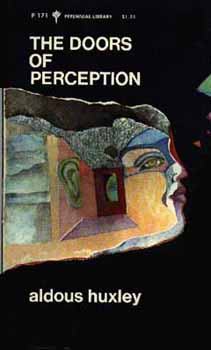
Minds at Large and The Doors of perception

E aí que eu achei um texto (aparentemente na íntegra) de Aldous Huxley: o famoso livro "The Doors of Perception", que fala sobre da experiência do escritor com formas de alterar a percepção - não só através de mescalina e afins, note bem. Resolvi traduzir (just for the fun of it) e postar aqui um trecho que capta bem a ideia da coisa toda, ainda que em um resumo grosseiro e em uma tradução tosca. Aí vai:

"Refletindo sobre a minha experiência, encontro-me concordando com o ilustre filósofo de Cambridge, Doutor. C. D. Broad, '(...)[que sugere que] a função do cérebro, do sistema nervoso e dos órgãos sensoriais é principalmente eliminativa, e não produtiva.

Cada pessoa é constantemente capaz de lembrar tudo o que já aconteceu a ela e de perceber tudo o que está acontecendo em todos os lugares do universo. A função do cérebro e do sistema nervoso é a de nos protejer da sobrecarga e da confusão provocadas por essa massa gigantesca de conhecimento largamente irrelevante e inútil, através do afastamento e do ocultamento de estímulos que nós, em outras circunstâncias, perceberíamos; isso nos deixa uma pequena faixa de percepção que é suscetível de ser inútil.
'

De acordo com essa teoria, cada um de nós é uma Mind at Large. (N. do T.: eu traduziria livremente Mind at Large como "Mente Livre", "Macromente" ou talvez ainda como "Consciência Universal") Mas até agora, como somo animais, nosso negócio aqui é, acima de qualquer coisa, sobreviver. Para que a sobrevivência biológica fosse possível, a Mind at Large teve que ser canalizada através de um 'funil', que é o cérebro e o sistema nervoso. O que sai do outro lado desse funil é uma pequena gota, um tipo de consciência que será útil para nos manter vivos neste planeta em particular.

Para formular e expressar o conteúdo dessa consciência reduzida, o homem têm inventado e elaborado um tipo de sistema de símbolos e filosofias implícitas a que nós chamamos de linguagem. Cada indivíduo é, ao mesmo tempo, beneficiário e vítima dessa tradição linguística em que nasceu; beneficiário, ao passo que a linguagem lhe dá acesso aos registros acumulados advindos da experiência alheia, e vítima, na medida que a linguagem lhe confirma a crença de que o percepção reduzida do mundo é a única percepção que há, molestando sem parar o seu senso de realidade, e ele substitui as coisas reais por palavras.

Aquilo que é chamado, no âmbito da religião, em 'este mundo' é o universo de perpeção limitada, expressada e petrificada pela linguagem. Os vários 'outros mundos', com os quais seres humanos iregularmente fazem contato são é tudo aquilo que não percebemos, é a totalidade da percepção e da consciência que pertence à Mind at Large.


A maioria das pessoas, na maior parte do tempo, conhece somente aquilo que passa pelo funil e que é consagrado como algo genuinamente real pela linguagem local. Outras pessoas, no entanto, parecem ter nascido com algum tipo de 'desvio', que contorna o funil. Outros desvios temporarios podem ser adquiridos espontaneamente, como o resultado de 'exercícios espirituais' direcionados para isso, através da hipnose, ou com fármacos e drogas.

Por esses desvios - permantentes ou temporários -não passa, de fato, a percepção de 'tudo aquilo que acontece em todos os lugares do universo' (porque o desvio não destrói o funil e ainda ignora muito daquilo que é a totalidade da Mind at Large), mas passa alguma coisa a mais que isso. Por esses desvios passa, acima de tudo, muito mais que a matéria útil, cuidadosamente selecionada, e definida por nossas cabeças estreitas e limitadas como um retrato completo (ou suficiente) da realidade."

E vale mencionar:

"If the doors of perception were cleansed everything would appear to man as it is, infinite." ("Se as portas da percepção estivessem limpas, tudo apareceria para o homem tal como é: infinito")

Por curiosidade, e com o apoio da Wikipedia, esse é o excerto do poema que serviu de inspiração para o título do livro aí em cima; aliás, o poema se chama "O casamento do céu e do inferno".

Assim, e porque parece igualmente conveniente (além de que eu acho que, comicamente, ninguém cita o livro do sr. Huxley lá em cima sem mencionar também essa banda), um clipe de "The End" do "The Doors", banda que, por sinal, também tirou o nome daí. Não sei ao certo se do livro ou do poema, mas pouco importa. Rock on, Mr. Morrison.


"This is the end, beautiful friend. This is the end, my only friend, the end. Of our elaborate plans, the end; of everything that stands, the end. No safety or surprise, the end. I'll never look into your eyes...again. Can you picture what will be? So limitless and free"
Aliás, o filme "The Doors" é muito bom e "Apocalypse Now" é mais ainda (essa música é usada várias vezes na trilha sonora; suspeito até que seja o tema principal do filme). E esse o fim do post. No safety or surprise, the end.

sexta-feira, 31 de dezembro de 2010


a partir do ano que

vem eu juro que
a vida vai ser agora.

Gregório Duvivier, porque eu já peguei um texto do blog dele e convém pegar mais esse :)

Martha

Conheci Martha na bilheteria de um cinema. Não. Foi no caixa de uma livraria. Não. Foi na fila de um banheiro. Isso. Foi na fila de um banheiro. Eu entrava no banheiro e ela já lavava as mãos. Não. Foi o contrário: eu lavava as mãos e ela entrava no banheiro. Não. Quando eu entrei no banheiro, Martha estava lá, sentada. Não. Eu estava no banheiro quando. Não. Talvez fosse realmente na bilheteria de um cinema. A verdade é que eu não lembro da primeira vez que eu vi Martha. Mas lembro da segunda.

A segunda vez que eu vi Martha foi deitada sobre o meio-fio, com uma ferida no rosto. Desci do táxi (esqueci de falar, eu estava num táxi). Perguntei: Tudo bem com você? e ela: Adivinha. e eu: Não. e ela: Não o que? e eu: Não está tudo bem. e ela: Era uma pergunta retórica. Me leva pra casa? e eu: Onde você mora? e ela: Para casa que eu digo é para a sua casa. E eu só me lembro até aí. O resto foi Martha morando na minha casa, esperando a ferida cicatrizar. Quando eu ia trabalhar, ela dizia: Traz iogurte? Nunca perguntei o porquê da ferida. Nem deixei de comprar iogurte.


Copiado descaradamente de "Rua Caio Mário", o blog do Gregório Duvivier, que é foda e tal, bom à beça, sabe como é.

segunda-feira, 6 de dezembro de 2010

In the USSR, the somewhat complicated novel is the pretentious douchebag who quotes YOU!

"Na maioria dos casos, as pessoas, inclusive os facínoras, são muito mais ingênuase e simples do que costumamos achar. Aliás, nós também."
(...)
"Talvez as faces vermelhas não impedem nem o fanatismo, nem o misticismo; a mim, porém, me parece que Aliócha era até mais realista que qualquer outra pessoa. Oh, é claro, no mosteiro ele acreditava piamente em milagres, mas a meu ver os milagres nunca desconcertam o realista.

Não são os milagres que inclinam o realista para a fé. O verdadeiro realista, caso não creia, sempre encontrará em si força e capacidade para não acreditar no milagre, e se o milagre se apresenta diante dele como um fato irrefutável, é mais fácil ele descrer de seus sentidos que admitir o fato. E se o admite, admite-o como fato natural, que apenas lhe fora até então desconhecido. No realista a fé não nasce do milagre, mas é o milagre que nasce da fé. Se o realista acredita uma vez, é justamente por seu realismo por seu realismo que ele deve forçosamente admitir o milagre."

Finalmente comecei a ler "Os Irmãos Karamázov", e deixei aí em cima dois dos melhores trechos até agora. Yet, considerando a falta habitual de algum leitor, serve para minha própria recordação posterior. Best regards to my future self!

#mimimi-tô-lendo-dostoievski-olha-pra-mim; pois é. Ainda que não seja essa a intenção.

E uma foto de Oscar Graf, também conhecido como Lênin, um soviético/russo ilustre. Sort of related.